

- AI for Coding: All the Hype and the Truth
- AI, The Full Potential As an Assistant Dev, There is no Best Better
- AI Limitations: The Case for Why It Matters
- The landscape of Software Engineer—Writing Code versus Building Solutions for Clients
- Your Golden Ticket: 3 Things You Have in the AI Age
- Essential Skills: How to Be the Software Engineer of the Future: A Playbook
- Part 1: — We Are Not Only An AI User — We Are One Of The People Who Create The Future

AI for Coding: All the Hype and the Truth
There used to be a saying about everyone becoming a programmer! Today, however, that vision has evolved: you can “prompt” an AI to code for you in natural language. Not science fiction any longer, we are in the here and now transforming the development paradigm.
AI, The Full Potential As an Assistant Dev, There is no Best Better
At this point generative AI is definitely capable of performing a wide range of technical tasks that are labour-heavy. Here are its key features and functions:
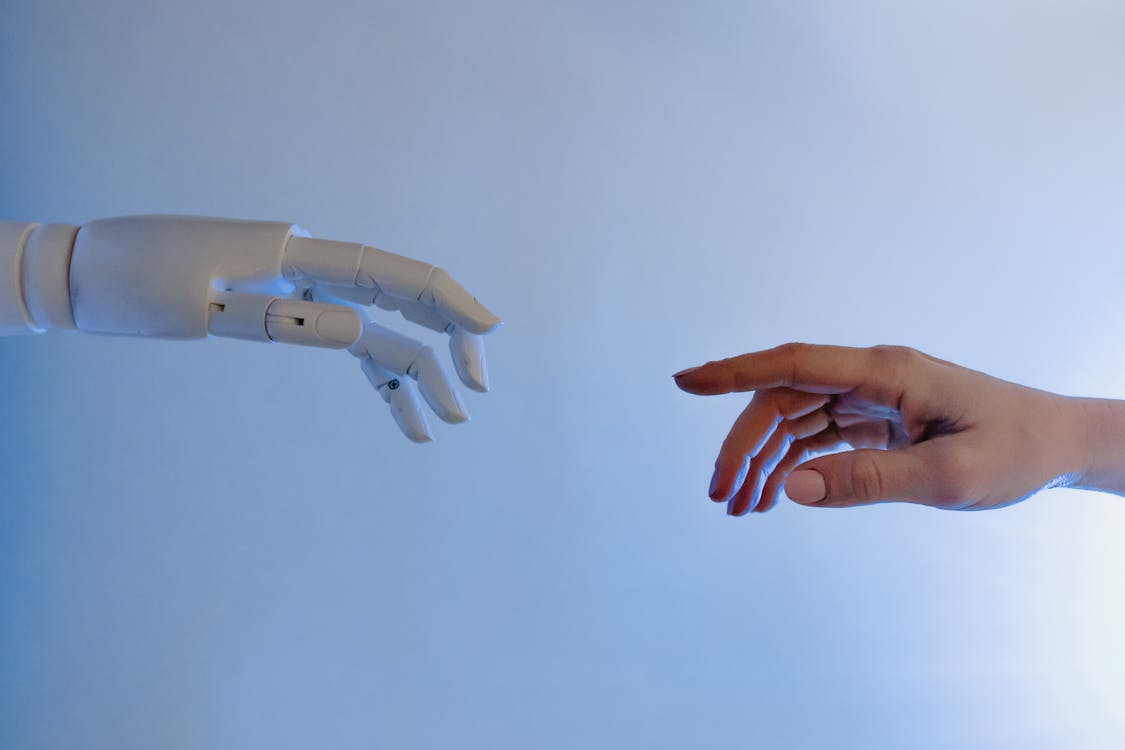
- Fast Code Generation: AI reduces each developers developing cycle, be it for the boilerplate code, complex features, or even the complete simple application.
- Language Translation: Which helps to translate code from one programming languages to another programming language such as from python to javascript, provides portability in between the platforms.
- Bug Fixing: AI powered algos crawl codebases, highlight usual bugs, propose specific solutions and reduce your debugging time by a large margin.
- Automating Tedious Tasks: Carrying out menial coding tasks that distract developers from true problem solving or creating new solutions.
That is, the AI is so powerful that it can populate the scaffolding of a beautiful-looking working dating app in just a few short seconds. Not just for one-off use cases, but in planting complex projects, this is a perfect use case for AI to serve as an incredible multiplier.
AI Limitations: The Case for Why It Matters (Magic to Explain)
So, despite how fabulous, smart, fancy, and cool AI gets, it remains the fabulous, yet rather stupid, junior developer. This has that fundamental limitation which strengthens that non replaceable humans delegation and human judgement.
Five Major Drawbacks of AI in Software Development
- Missing the Context: Software development involves business requirements, user needs, and project constraints that AI lacks knowledge of, and therefore cannot use AI for real-world decisions.
- Quality Inconsistency: AI spins a code on the fly, so the code will work, but the quality is generally way down. When Codex or Jam can provide optimized code, clean code, best-practice code, and so on.
- Security Risks: The code created by AI often includes security vulnerabilities that are better detected and mitigated by humans.
- ARCHITECTURE RESPONSIBILITIES: AI fails to judge high-level design of a system for scalability or complex architecture aspects.
The landscape of Software Engineer—Writing Code versus Building Solutions for Clients
Software engineers are no longer just for writing code but are turning into solution architects, technical problem solvers, and technology strategists. As you can imagine, this transformation brings unparalleled opportunities for people who are able to adapt to changes.
The New Software Engineer Profile
Some Expectations from a Modern Software Engineer
- Appreciate Business Context: Creates a link between tech implementation and business goals.
- Lead AI Integration: Be smart about usage of AI tools; Know when to use them and when not to, while ensuring code quality
- Developer/ Designer with User Experience in Mind: The User should always be the centre of the solution you are designing around.
- Make Your Systems Reliable: Improve quality by building reliable, scalable and secure systems to meet real word demands.
🚀 Accelerate Your Development Workflow
Enjoy the utility of development over the cloud
Try RunPod Cloud GPUYour Golden Ticket: The abilities that you possess in the time of AI
AI may be great at writing code, but software engineers have neirreplaceable traits that are becoming more, not less, valuable in the new era of AI.
🧠 Critical Thinking
Skills to analyze trade-offs and make decisions on complex problems that AI cannot replace.
🎨 Creative Problem Solving
Creative solutions to one-of-a-kind problems that may need a human touch and creative thinking
🤝 Communication Skills
Communicating technical information to stakeholders and working together with cross-functional teams.
📊 Business Acumen
Comprehending market demands, end-user needs, and business restrictions, which influence technical choices.
📈 Streamline Your Project Management!
Get Started with ClickUpThe Guide to Success: Skills Required to be the Future Software Engineer
In order to succeed in an AI-augmented future, software engineers must build an intelligent skill set that enhances AI intelligence rather than competes with it.
Essential Technical Skills
- Get The Most Out Of AI Tools: How To Properly Prompt, Customize and Integrate AI Coding Assistants Into Your Workflow
- System Design: Learn how to champion a scalable, maintainable systems architecture — AI cannot design these on its own.
- Security: Learn security fundamentals and how to find and remediate vulnerabilities found in AI-generated code.
- Performance tuning: Learn to tune code for speed and memory efficiency and for scalability.
Strategic Business Skills
- Product Thinking: Have insights into consumer behavior and market trends as well as product strategy.
- Analyze data: Use metrics, user feedback, and performance data to inform technical decisions fueled by data.
- Cross-Functional Collaboration: Collaborate with designers, product managers, and business stakeholders.
- On technical expertise: Lead teams, mentor junior developers, and steer technical vision.
✍️ Use AI to Better Your Content
Try Frase for Content OptimizationYou Are More Than an AI User; You Are a Creator of Tomorrow
The revolution AI brings to software engineering is not the one of replacement, but of augmentation. AI will take care of the boring bits but engineers are still doing the most important work in the world: solving problems, building systems that feel understood by the user and change the world as we know it.
But the future will belong to the software engineers who harness AI as a force multiplier and cultivate the distinctly human skills that no algorithm can truly replace. Rather than just surviving the AI revolution, you’re leading it by emphasising critical thinking, creative problem-solving, and business completion.
The question is if and how AI will change software engineering. The question is: Are you ready to help shape that change?
🎯 Want to Future-Proof Your Career?
Build the skills that will make you invaluable in the AI age
Begin Your Learning Journey


Leave a Comment